SEASONAL SELF-CARE BLOG
Spring Yin Pose
Posted on April 27th, 2015


Spring Yin Pose: Baddha Konasana (Leigh Evans)
As the gorgeous green sprouts push their way up out of the ground, the Spring young yang energy catapults us out of our hibernation. Hold on because though exciting and beautiful, Spring can be a bumpy ride. Do you feel irritable, angry, stressed out or restless? Are your shoulders and neck tight? Do you have headaches, eczema or other skin issues? Are your eyes strained more than usual? You may be experiencing signs that your Spring organ network, liver and gall bladder organs, are overloaded with toxins and need some purification and loving attention. It is a great time to do a cleanse, but we can also use our seasonal yoga practice to help smooth out the bumpy ride.
Seasonal asanas helps us harmonize our inner rhythms with the energetic movements of each season, enhancing our interconnectedness with the environment. With skillful practice of asanas that target our Spring organ network, we can help our body and mind stay balanced during the jolting ascending energy of the wood element this Spring. Practiced with deep awareness, Spring asanas can help release congestion and awaken prana in the liver and gall bladder meridians.
If you’re feeling over stimulated and agitated this Spring, try the beautiful yin pose, Baddha Konasana folding forward to stimulate both the inner leg lines of the liver meridian and outer hips of the gallbladder meridian. This deeply calming pose will help smooth out the emotional roller coaster that comes with an aggravated liver network. Be sure to rest your forehead on a pillow or bolster to help release the agitation in the mind. Pay particular attention to softening and relaxing the eyes which are are associated with these organs. Allow your exhalations to lengthen and deepen as you rest in the pose.
Q & A with Margherita Tisato
Posted on April 23rd, 2015
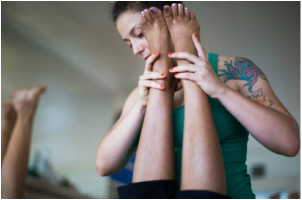
We chatted with Yoga Sukhavati graduate Margherita Tisato about yoga, teaching, and how the Yoga Sukhavati 300 YTT transformed her life and practice.
When did you start practicing yoga? How did you find yoga?
I started practicing yoga officially back in 2000, in Milan Italy, where I’m from. I say “officially” because I was studying dance at the time and my dance teacher was a yogini and incorporated a lot of breath work, seasonal practice and energy work in her teaching. Sometimes I feel like I’ve been practicing yoga for all my life!
How has the practice changed your life?
Once I started practicing consciously, meaning once I started to differentiate my dance-art practice from my yoga practice, the more subtle benefits really started to kick in: non-competitiveness, acceptance, surrender, compassion, self-care...
What were you doing before you took your training?
Before my first training I was working as a dancer and a make-up artist: the dancer part I loved but didn’t pay. The make-up artist paid well, but was extremely taxing because of schedule and politics involved. The more I practice yoga (especially incorporating the Yamas and Niyamas, or code of conducts), and the idea of yogic ethics, the more the entertainment industry became hard to digest.
Why did you decide to take a 200-hr teacher training?
It took me a few years of dedicated practice before I decided I was ready to take a training. Even though I had been teaching dance for years at the time, the idea of leading others in such a transformative practice with all its many layers and facets was still daunting. To this date, I find teaching yoga much more intense than teaching dance or Butoh, due to the therapeutic value that these practices have.
What stands out the most about your experience from your teacher training?
My training was deeply experiential and unsettling in some ways. Lea Kraemer, my first teacher is a true seeker and opened the doors for me to explore without fear of judgment.
How has the Yoga Sukhavati training transformed your life? What are you doing now?
I became more aware of my responsibilities towards myself. More aware of the importance of finding a voice that comes from direct experience, while honoring and respecting traditions. I found the drive toward constant learning and acceptance toward constant transformation. There is no one way of doing anything, nor one fixed thing we can “sit” on and lay back, if we really walk this path. I learned to be fearless in my teaching because I learned how to teach from the heart.
How was it to work with Leigh?
Inspiring. Humbling. Fun!
What advice would you give to someone who was on the fence about doing a 200-hour teacher training?
Be open to the experience. The mind guides us most of our lives. We can learn and memorize so much and so many books in a lifetime, but this learning will not replace the embodied experience. Frightening as it is, the sacred space Leigh creates will hold you safely to allow you to surrender to the experience.
What stood out to you about the Yoga Sukhavati 300-hour Advanced training?
The most challenging and rewarding part of this training was the high value given to self-care and truthfulness. In a very innovative yet classical way, Yoga Sukhavati brings to light the true voice of each of its trainees in a unique and powerful way. And self-discovery is never easy!
What do you like most about teaching yoga?
I believe teaching is my mission. I don’t necessarily “like” teaching yoga. I find it challenging and inspiring, and rewarding and terrifying all at the same time, everyday. But it’s what I do, and where I feel at my fullest, most of the time.
You can find Marghertia at Loom Yoga Center in Bushwick.
Balance Vata Dosha in the palm of your hands
Posted on December 3rd, 2014

Are you feeling a bit scattered, overwhelmed, fragmented this Fall. Is it difficult to focus and complete projects? If you are harvesting your living space, did you run into some difficulties? Suddenly you wanted to clear everything out all at the same time and there were piles everywhere and you flitted from one pile to the next and nothing got organized and it all became too much?You might be feeling the effect of Vata dosha out of balance. According to Ayurveda, Vata dosha, the air element, tends to gets out of balance in the Fall. The qualities of vata are dry, light, cold, rough, subtle, mobile, clear, and erratic.Is your skin suddenly super dry? Just last week my skin started getting really chapped and I started reaching for the lotion constantly. We’re feeling dry at the same time as these leaves are turning their beautiful colors, drying up, and falling off. We feel these same effects as nature because we are made up of the same elements.Other vata qualities we experience in the Fall is the erratic weather. One minute it’s warm and the next cold and rainy. With the windy Fall days, we feel the mobile quality. You may experience this increased erratic and constant movement reflected in your thoughts. Are your thoughts spinning all over the place making you feel fragmented and overwhelmed? Have you been experiencing insomnia from racing thoughts?
Mudra to Balance Vata Dosha
Mudras, are sacred hand gestures that redirect prana and enhance vitality. They assist us in connecting with cosmic consciousness and shifting negative energy to positive energy.

Sit in a comfortable position.
Place your middle finger on your thumb and put all the rest of your fingers at the base of your thumb. It looks like a hook.
Rest your hands on your lap.
Relax and breathe deeply.
Stay here for 5-8 minutes.